
Much of the work of the federal government is accomplished through contracts with non-governmental entities. For the fiscal year ending September 30, 2015, those contracts added up to more than $500 billion. The Legislature wants a good portion (23%) of those dollars to go to small businesses as a means of strengthening the nations’ economy. To achieve that goal, the government designates certain contracts and subcontracts as “set aside” for small businesses. The Small Businesses Administration oversees these set-asides. Contracts are further set aside for small businesses with additional distinctive characteristics including small businesses that are disadvantaged, women-owned, service-disabled, veteran-owned, and small businesses located in economically distressed communities (HUBZones). One of the goals of the set-asides is to help small businesses of various types to grow and to develop the competence and expertise to compete in the open market for government contracts.
 Several months ago the New York Times published an article on why the #MeToo phenomenon has become one of the most important movements in the employment law arena.1 Journalist Susan Chira explained the results of a national online survey reporting that an astounding 81% of women and 43% of men had experienced some form of sexual harassment or assault in their lifetimes—including at home, and in their community or workplace. No other survey had reported numbers so high, suggesting that this type of conduct has been under-reported for years. In another survey conducted by the CDC, researchers noted that nearly 1 in 10 respondents reported being sexually harassed in the workplace within the past 12 months—though women, multi-racial individuals and divorced or separated individuals were significantly more likely to say they’d experienced such discrimination.2
 Beginning in 2005, Allegiance entered into agreements with hospitals located in the Southeastern United States to provide Intensive Outpatient Psychotherapy services to patients who were Medicare beneficiaries on the hospitals’ behalf. The settlement resolves allegations that many patients were provided services that did not qualify for Medicare reimbursement but were billed as such.
 Minnesota is known as an employment “at-will” state. This means that an employer can terminate an employee for any reason, or no reason at all. This “at-will” doctrine gives employers considerable discretion, and allows them to terminate an employee for what may seem like unreasonable and irrational reasons. For example, let’s say your employer terminates you for walking into work one day with a Pepsi because he has an unofficial Coca-Cola-only policy. While this is not a great business practice, there is nothing wrongful or illegal about this termination.
 Halunen Law plays key role as co-counsel in victory for consumer rights and arbitration
 On January 11, it was reported that President Donald Trump, during a meeting with a bipartisan group of senators at the White House, where he rejected a bipartisan deal on a program affecting immigration to the United States, referred to Haiti and African nations as “shithole countries” and reportedly went on to state that the United States should have more people coming in from places like Norway.
  I vividly remember about a year ago when the sex tape of Donald Trump was released and the world began discussing whether or not the conduct was sufficiently egregious to sink his run for the presidency.The news media covered the story for weeks, with journalists and pundits opining on the propriety of the underlying conduct- as if there was any question about the answer. Some people, including female supporters of Trump, considered it merely “locker room” talk. Others expressed their disgust that women would be so demeaned and that someone running for the presidency would ever engage in such salacious behavior. Although Trump did not actually make his repulsive comment directly to the woman, he used his position of unequal power to get what he wanted without any consideration for the woman’s physical or mental well-being.
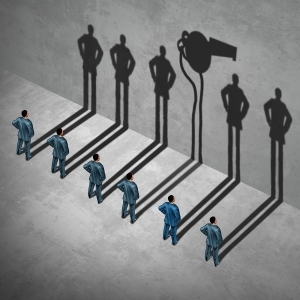 You know when something’s not right at work. Numbers don’t add up. Documentation doesn’t reflect what you know to be true. Safety procedures aren’t being followed. Fraud and illegal activity is a reality at many workplaces, and it’s often you – the employee – who identifies and has the courage to bring that fraud to light. If your employer or government contractor is engaged is some sort of fraud/illegal activity, you may be wondering what you can do about it, what the risks might be to your livelihood and reputation, and whether or not it’s worth it to “blow the whistle.” While whistleblowers have often been labeled “disgruntled employees” by the companies they’re seeking to expose, they are more likely champions of the truth, and there are statutes that both