According to the U.S. Equal Employment Opportunity Commission, the number of discrimination complaints based on national origin has risen by 76 percent in just the past 15 years. In 2011, more than 11,800 complaints were filed alleging workplace discrimination based on English-speaking ability or having an accent.

For example, a contract driver for FedEx in Utah, says he was fired because a single person at a weigh station concluded that he did not speak English. The Iowa weigh station issued a warning, which is less than a citation against his employer. When FedEx found out, they ordered his company to fire him.

Read More…

Halunen Law - Alcoholism & Drug Addiction Disability The current opioid epidemic afflicting our nation brings up complex issues regarding drug or alcohol addiction, employee rights, and what constitutes a disability.

The Americans with Disabilities Act of 1990 (“ADA”) and the Minnesota Human Rights Act (“MHRA”) generally protect employees with alcoholism or drug addiction (as disabled) if the employees can perform the essential functions of their jobs, even if they need a reasonable accommodation to do so. But if employees are unable to perform their job even with a reasonable accommodation, or if the employees are a threat to safety, then they are not protected under the ADA or MHRA. To qualify as disabled, an employee’s addiction must impair major life activities, such as walking, sleeping, or thinking. In other words, depending on the court you are in, alcoholism and drug addiction is not automatically considered a disability, but will be addressed on a case-by-case basis.

Read More…

During the economic downturn, many Minnesota workers may have turned to temporary employment or staffing agencies to find work. Temporary and contract workers often have different benefits, contracts, and responsibilities than permanent employees, but do they have different employee rights in the workplace?

Both state and federal laws protect employees from being treated unfairly on the basis of their race, sex, age, disability or religion in the workplace. Workers who experience workplace discrimination on the basis of these, or other protected classifications, have the right to seek legal recourse.

Read More…

“The moral test of government is how that government treats those who are in the dawn of life, the children; those who are in the twilight of life, the elderly; those who are in the shadows of life; the sick, the needy, and the handicapped.”

.- Hubert H. Humphrey

Halunen Law - Protection for Employees Reporting Abuse Against Vulnerable AdultsThrough their state-granted licenses, healthcare facilities have been entrusted with the duty to care for Minnesota’s vulnerable adults. Unfortunately, history gives us horrifying accounts of abuse and neglect of the most vulnerable among us while in the care of those facilities. For decades, the maltreated were left to suffer in silence, unless a vigilant family member or health care provider spoke up.

In April 1980, Minnesota Governor Al Quie signed Minnesota’s Vulnerable Adults Act into law. The Act was intended to protect vulnerable adults from abuse or neglect and to assist those charged with the care of vulnerable adults to provide safe environments. Since then, the Vulnerable Adults Act has been revised to strengthen protections for Minnesota’s vulnerable adults’ population.

Read More…

The Equal Employment Opportunity Commission (EEOC) initiated a lawsuit against Wal-Mart alleging that the retail-giant allowed an employee to sexually abuse a female employee over a number of years, and then retaliating against the woman when she complained of the abuse.

According to a complaint filed in federal district court, the woman, who is developmentally disabled, endured harassment of a sexual nature (including touching in inappropriate areas) while at work from April 2005 through January 2011. The complaint also alleges that store management did not take prompt or effective actions to address the abuse. Three weeks after complaining about the long-standing abuse, Wal-Mart terminated her employment.

Read More…

If you are a Minnesota employer that uses criminal background checks when making hiring decisions, the Equal Employment Opportunity Commission wants you to rethink how you use those checks in the hiring process. The EEOC issued new guidelines that although are not ‘legally binding’ they will be used by the EEOC when it enforces claims of employment discrimination.

The goal of the new EEOC guidelines is to encourage employers to consider the impact a past criminal record could have on the job being applied for. It only wants an employer to ask about the criminal history of an applicant when it affects the job itself. An example could be an applicant’s conviction on embezzlement charges that could disqualify that applicant from a position that entails any fiduciary responsibilities.

Read More…

Minnesota workers are protected under employment law from discrimination at work on the basis of their gender, race, age, disability or religion. But, what happens when the perpetrator is an equal opportunity offender?

A recent news story examines this new trend in the workplace – bullying. This behavior consists of supervisors hassling their subordinates byway of poor performance evaluations, verbal abuse, contradictory directives, and even barring them from certain work or social activities.

Read More…

A federal judge dismissed a racial discrimination lawsuit brought by the Equal Employment Opportunity Commission alleging that a hiring policy by test preparation company Kaplan discriminated against African American applicants. The test preparation company reviewed the credit history of job applicants and declined to hire those with imperfect credit histories.

The Equal Employment Opportunity Commission argued that the policy was discriminatory, affecting African American job applicants more than other groups and evaluating employees on a factor that was not directly relevant to how they would perform on the job.

Read More…

A screenshot reading "Connect 700: Learn more about it and how to participate. A blue bar lies at the bottom with a green and white rounded "M" logo.

In 2014, a Minnesota demographic survey conducted on State employees showed that less than 4% self-identified as having a disability. When compared to the presence of employees with a disability statewide and nationwide, 7.9% and 10.5% respectively, it was evident that the State’s workforce did not reflect the diversity of Minnesota’s population of individuals with a disability.

As a result, former Governor Dayton’s office issued Executive Order 14-14, which issued a goal for State agencies to increase employment for people with disabilities to at least 7% by August 2018. Fast forward four years, on August 29, 2018, former Governor Mark Dayton’s office announced that Minnesota met its goal to have 7% of its workforce identified as having a disability.

This modest increase of individuals with a disability in the State’s workforce can be attributed in no small part to the implementation of a trial work program, Connect 700.

Read More…

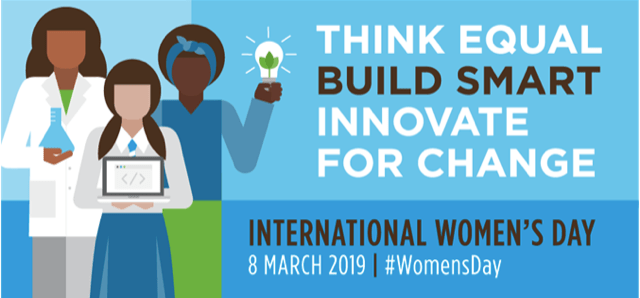
A logo reading "Think Equal, Build Smart, Innovate for Change, International Women's Day, 8 March 2019| #WomensDay" The logo has a blue background. Three illustrated women with no faces stand by the text. One woman represents a scientist, wearing a white lab coat and holding a vial. One woman holds a laptop wearing a sweater and a long blue skirt. One holds a lightbulb, and a green leaf floating within. She wears a headband around her afro, a blue sweater, and long green bottoms.

International Women’s Day, celebrated on March 8th, is a time to reflect on the progress made for women over the last 100 years and celebrate their courageous acts throughout history.[1]  It is also a time to call for continued change.

The Continued Uneven Playing Field

Despite the movement to propel women’s opportunities, corporate America continues to allow an uneven playing field.

A recent study, Women in the Workplace 2018, by McKinsey & Company and in partnership with LeanIn.Org, found that the growth of women at every level in corporate American has stalled.[2] While the study found that women are doing their part – earning more bachelor degrees, asking for promotions, negotiating better salaries, and staying in the workforce at the same rate as men  – women remain unrepresented at every level.

It begs to question if women are doing their part – what’s the problem?

The Answer – Companies are not held accountable.

While the vast majority of companies say they are committed to gender diversity – the evidence indicates otherwise. Women are less likely to be hired for entry-level positions and promoted to manager-level jobs. The disparity widens further – and further – as promotions hit the C-Suite level. Factors such as discrimination and sexual harassment contribute to lack of diversity in the workplace.


Discrimination

Gender discrimination can take many forms, yet it always signals disrespect. It is also illegal under Title VII and the Minnesota Human Rights Act, among other laws. Sexism can be subtle, such as a male coworker questioning a female coworker’s judgment on an area of expertise. It can be severe, such as a male manager making a derogatory sexist comment to a female colleague. As negative experiences compound over time, women view their workplaces as less fair and are three times more likely to leave their jobs.[3]


Sexual Harassment

Thirty-five percent of women in corporate America experience sexual harassment at some point in their careers, such as hearing sexist jokes to being touched in an inappropriate sexual way. Women who do not conform to traditional feminine expectations – holding authority and working in male-dominated fields– are more likely to be targeted. Despite the momentum of the #MeToo movement, we need continued emphasis that sexual harassment is unacceptable and will not be ignored.


Take Charge

If you have experienced discrimination or sexual harassment, know that you are not alone. We can help. For over 20 years, Halunen Law has fought for the rights of both men and women, who are subject to unwelcome sexual comments and behavior, as well as those subject to unlawful discrimination. We hold employers accountable so that you can feel safe in the workplace.

Learn more about International Women’s Day 2019


© 2026 Halunen Law | Minneapolis Employment Attorneys