Coler stated, “The ‘frightening truth’ is that the No. 1 source of FCA settlements and judgments was fraud in the health-care industry,” adding, “This is “an area of our lives where certainty and trust are paramount, but fraud is ubiquitous.”
The article cites the U.S. Department of Justice’s recent report, which announced that the U.S. government and whistleblowers were party to 543 FCA settlements and judgments this past year—the highest number ever in a single year—and recovered $2.68 billion. The article highlights the recovery of $48.3 million from fraudulent Paycheck Protection Program (PPP) loans, which Coler shared “is just the tip of the iceberg—I anticipate this number will grow significantly in the coming years.”
Stressing the critical role whistleblowers and whistleblower protection laws play in FCA cases and the successful recovery of taxpayer funds, the article specifies whistleblower-initiated suits account for about 86% of the DOJ’s recovery, which Coler added “confirms that whistleblowers are a powerful force in fighting fraud and protecting taxpayer dollars.”
Halunen Law Wins $4.6 Million Verdict On Behalf of Client in Whistleblower Case
In a landmark whistleblower case in Minnesota, a highly regarded former radiologist attains justice following wrongful termination for bringing safety concerns to light
MINNEAPOLIS, MN (Jan. 23, 2024): A board-certified radiologist, senior shareholder, and employee of Consulting Radiologist Limited (CRL) was awarded $4.6 million in damages by a Hennepin County jury for being wrongfully terminated under Minnesota’s whistleblower protection
law. Halunen Law of Minneapolis, Minnesota, represented the plaintiff in this landmark trial. CRL contracts to provide services to Allina Health, including Abbott Northwestern, in the Twin Cities metro area.
After nearly 20 years with CRL as a board-certified radiologist, and senior shareholder, the plaintiff was deeply invested in CRL’s future success. As such, in good faith, he brought forth patient safety concerns to the company’s leadership. When the CRL board repeatedly failed to act, the plaintiff
warned that if the unsafe and unethical practices continued, he would have no choice but to report his concerns to Allina Health, the parent company of Abbott Northwestern Hospital. Days after affirming his commitment to share his concerns with Allina Health, he was subsequently terminated by the CRL Board of Directors. As a result of his termination, the plaintiff lost his radiologist position and his livelihood.
The two-week-long trial and deliberation resulted in a jury verdict, finding the plaintiff was terminated in violation of the Minnesota Whistleblower Act. The jury awarded him damages for past and future wage loss and emotional distress, totaling $4,587,602.
Attorney Pamela Johnson, one of Halunen Law’s senior trial attorneys representing the plaintiff, commented: “Today we sent a message. This jury understood the serious nature of Defendant CRL’s conduct and held it accountable in a big way. This is one of the largest whistleblower verdicts ever in Minnesota. It should be a warning to all Minnesota employers that if you retaliate against employees who stand up to expose safety concerns, you will be held accountable.”
About Halunen Law: With offices in Minneapolis and Chicago, Halunen Law offers experienced legal representation to employees and whistleblowers nationwide. Halunen Law has achieved a reputation as a fearless, tenacious, and successful plaintiffs’ law firm with a laser focus on achieving justice and
meaningful results for its clients. More information at halunenlaw.com.
If you feel you’ve experienced illegal action in your workplace, we encourage you to submit a Case Review Form to our firm. One of our attorneys will review your information, and you’ll receive a response from our firm in a timely manner. There is no charge for this confidential process. And, if we take your case, as a contingency-based law firm, there is no cost unless we win. We’re here to help you navigate your lawful rights and ensure you get the treatment you deserve. Together, we can hold employers accountable and create a fairer workplace for everyone.
Atlantic Home Health Care settles fraud allegations related to kickback scheme and abuse of “telehealth”
Washington, DC—January 6, 2024: Atlantic Home Health Care, LLC, (AHH), operating in Arizona and eight other states, agreed to pay $9.9 million to settle allegations the company deprived patients suffering from radiation exposure of needed in-home care and instead contacted patients by telephone. The lawsuit was filed under the whistleblower provisions of the False Claims Act by Phillips & Cohen LLP and Halunen Law PLLC in the U.S. District Court in the District of Arizona.
The lawsuit involved fraud related to the Energy Employees Occupational Illness Compensation Program Act of 2000 (EEOICPA), which provides compensation and free medical treatment for radiation-related illnesses caused by testing of nuclear weapons during World War II and the Cold War. For many victims, the devastating impact of this exposure took decades to become symptomatic.
In its complaint, the United States alleged that, between 2017 and 2021, AHH falsely billed the Energy Program for services provided by unqualified people and for in-home nursing and personal care supposedly provided by employees were not physically present in patients’ homes. The government also alleged that AHH paid kickbacks, in the form of cash payments up to $5,000 for patient referrals via its “friends and family program” and in-kind payments for food, internet, travel, and other expenses made to patients and their families.
The investigation and resolution of this matter illustrate the government’s emphasis on combating healthcare fraud, the power of a courageous whistleblower, and one of the most formidable tools in this effort — the False Claims Act.
Halunen Law FCA attorney Susan Coler, a co-counsel on the case, stated, “We are gratified that this case resolves allegations that Home Health Care deprived an extremely vulnerable population of needed in-person home healthcare while receiving money from the government for services it did not provide. The False Claims Act did its work here of challenging alleged egregious misconduct that has the potential to harm both the patients involved and taxpayers, who intend their funds to be used for their intended purpose.”
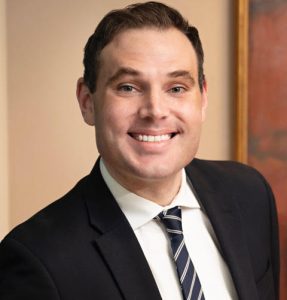
Halunen Law is pleased to announce that attorney Kyle Hahn has joined the firm’s employment law practice group. Kyle brings a collaborative spirit, an acute understanding of the legal process, and a steadfast determination to hold others accountable for their illegal actions. He joins a team of Halunen Law attorneys dedicated to defending the rights of employees and whistleblowers.
With a depth of knowledge and strategic acumen, Kyle has guided clients through complex legal matters to successful outcomes. His practice includes cases of discrimination, retaliation, and the gamut of employment matters, with considerable litigation experience in state and federal courts. Kyle offers clients a personal, professional approach coupled with a dogged determination to get them justice.
After graduating magna cum laud from St. Cloud State University, Kyle pursued and received his law degree from the University of St. Thomas School of Law, where he was deeply engaged in school activities. He has admissions to the Minnesota State Court and U.S. District Court of Minnesota.
About Halunen Law:With offices in Minneapolis and Chicago, Halunen Law offers experienced legal representation for employees, whistleblowers, and those who have experienced illegal actions in their workplace. Halunen Law has achieved a reputation as a fearless, tenacious, and successful plaintiffs’ law firm, focused squarely on achieving justice for its clients and creating workplace and societal change. For more information, visit halunenlaw.com.
When President George H.W. Bush signed the Americans with Disabilities Act (ADA) into law more than a quarter century ago, it represented a sea change for the rights of those who have disabilities and their access to housing, transportation, places of business, and employment opportunities.
Side view of hearing impaired man working on laptop at office
Like other laws that prohibit discrimination in employment against people because of their race, gender, national origin or religion, the ADA and parallel state laws, such as the Minnesota Human Rights Act (“MHRA”), protect disabled people from adverse decisions and actions in hiring and firing and the terms and conditions of employment. Unlike those other laws, however, the ADA and the MHRA also impose affirmative obligations on employers to make “reasonable accommodations” for an employee’s disability – upon the employee’s request – if the worker can otherwise perform the job’s essential functions.
The failure to provide reasonable accommodations, as well as an employer’s failure to engage in a mandated “interactive process” with the employee to determine the feasibility and scope of the accommodation, violate state and federal law. Accordingly, an employee with a disability who asks for a reasonable work environment, schedule, or other employment changes, must understand their rights and available remedies if the employer engages in reasonable accommodation discrimination.
What Is Reasonable Accommodation In the Workplace?
Under the ADA and the MHRA, the obligation to provide reasonable accommodations to disabled employees applies to employers that have 15 or more employees. Generally, a reasonable accommodation is any change in the work environment or in how a job is customarily performed that enables a disabled individual to apply for a position, do the job, or gain equal access to the benefits and privileges of that job.
What Does “Reasonable” Mean?
The “reasonable” part of the accommodation means the requested or proposed modification is one that doesn’t cause the employer “undue hardship.” Undue hardship means the accommodation would involve significant difficulty or expense when considering the resources and circumstances of the particular employer relative to the cost or difficulty of providing a specific modification.
What Are Examples of a Reasonable Accommodation?
Common examples of reasonable accommodation in the workplace include providing:
Modified workspaces to allow for physical accessibility
Modified or flexible work schedules, including allowing remote work
Devices, equipment or assistive technology
Qualified readers and interpreters
Generally, the following modifications wouldn’t be considered reasonable accommodations:
Removing an essential function or hiring someone else to perform the function
Reducing production or performance standards
Reassigning the employee to a different supervisor
Promoting the employee to a higher position
Provisioning “light-duty” items
Excusing misconduct
Providing “personal-use items,” such as eyeglasses, wheelchairs or prosthetic limbs
While an employer doesn’t need to provide a requested or proposed accommodation if it would cause significant difficulty or expense, it’s obligated under the MHRA (but not the ADA) to make “documented good faith efforts to explore less restrictive or less expensive alternatives, including consultation with the disabled person or with knowledgeable disabled persons or organizations.” This consultation requirement is part of the “interactive process” between the employer and employee regarding accommodation mandated by federal and state law.
How and When Should I Request a Reasonable Accommodation?
The process of exploring a reasonable accommodation begins when an employee requests modifications to their job or work environment. Written requests aren’t required. The employee can make a request in face-to-face conversation, email or any other communication method. The request can be made in “plain English” and need not mention the ADA or state disability law or use the phrase “reasonable accommodation.”
An individual with a disability may request a reasonable accommodation at any time during the application process or during the period of employment. Neither the ADA or the MHRA precludes an employee with a disability from requesting a reasonable accommodation because they did not ask for one when applying for a job or after receiving a job offer. Rather, an individual with a disability should request a reasonable accommodation when they know that there is a workplace barrier that is preventing them, due to a disability, from effectively competing for a position, performing a job, or gaining equal access to a benefit of employment. As a practical matter, it may be in an employee’s interest to request a reasonable accommodation before performance suffers or conduct problems occur.
What’s the Interactive Process for a Requested or Proposed Accommodation?
An employee’s request is the first step in the “informal, interactive process” between the employer and the employee as to providing a reasonable accommodation.
As set forth in the MHRA, “this process should identify the limitations resulting from the disability and any potential reasonable accommodations that could overcome those limitations.” The employer can ask the employee relevant questions to make an informed decision about the request, including asking about the employee’s disability and functional limitations and what type of reasonable accommodations are needed.
An employer isn’t required to provide a specific requested accommodation but may offer alternative suggestions and discuss their effectiveness and feasibility with the employee.
How Long Does an Employer Have to Accommodate a Disability?
While neither the ADA nor the MHRA sets a specific time frame for engaging in the interactive process and implementing a reasonable accommodation, an employer can’t unreasonably drag its heels. As the Equal Opportunity Employment Commission (EEOC) stated in guidance on this point:
An employer should respond expeditiously to a request for reasonable accommodation. If the employer and the individual with a disability need to engage in an interactive process, this too should proceed as quickly as possible. Similarly, the employer should act promptly to provide the reasonable accommodation. Unnecessary delays can result in a violation of the ADA.
Is Your Minnesota Employer Engaging in Reasonable Accommodation Discrimination?
Given the nuances and fact-specific analysis involved in determining whether an accommodation is “reasonable” and whether an employer has met its obligations under Minnesota and federal law to engage in a good faith interactive process, it can be difficult for an employee to know if the employer has engaged in prohibited reasonable accommodation discrimination.
As discussed, not every denial of a requested modification violates the law. But when an employer’s response doesn’t meet the requirements of Minnesota or federal law, the lack of accommodation for an employee with a disability can mean the loss of a job opportunity or a paycheck, be a major career setback, and cause psychological stress. For all these reasons, state and federal laws provide such employees with remedies if they experience reasonable accommodation discrimination. These not only include requiring employers to make reasonable accommodations, but also can involvehiring, promotion, reinstatement, back pay and attorneys’ fees.
The Role of An Attorney In Workplace Discrimination Cases
If you’ve requested a reasonable accommodation to address your disability or limitations and your employer denied your request or didn’t respond to it, speaking with an experienced disability discrimination attorney is the best way to understand your rights, determine whether your employer violated the law, and pursue any available remedies, including compensation.
Contact Halunen Law Today To Discuss Your Workplace Discrimination Questions and Concerns
Workplace discrimination, including reasonable accommodation discrimination, is illegal. If you feel you’ve experienced illegal action in your workplace, we encourage you to submit a Case Review Form to our firm. One of our attorneys will review your information, and you’ll receive a response from our firm in a timely manner. There is no charge for this confidential process. And, if we take your case, as a contingency-based law firm, there is no cost unless we win. We’re here to help you navigate your lawful rights and ensure you get the treatment you deserve. Together, we can hold employers accountable and create a fairer workplace for everyone.
Halunen Law attorney Susan Coler shared her expertise with SHRM reporter Leah Shepard on cases to be heard in the current U.S. Supreme Court session that impact employment law. These cases involve whether an involuntary transfer with no wage change can be retaliatory and whether a whistleblower must prove intent to retaliate in a case under SOX. Coler emphasized the importance of evaluating all decisions affecting an employee’s terms and conditions of employment to be sure the reasons are not discriminatory, as well as the importance of appreciating whistleblowers, who protect honest companies and deter unlawful competitors.
Read the full article: “Supreme Court Cases Will Address Employment Discrimination and Whistleblower Protections.”
A Partner at Halunen Law, Susan Coler is a member of the Halunen Law False Claims Act (FCA)/Whistleblower Practice Group. She represents whistleblowers who challenge illegal corporate conduct, particularly fraud against the government. As an MSBA Labor and Employment Law Specialist, Susan has also brought successful retaliation claims in connection with FCA/qui tam cases and as stand-alone actions.
About SHRM: As the voice of all things work, workers and the workplace, SHRM is the foremost expert, convener and thought leader on issues impacting today’s evolving workplaces. With nearly 325,000 members in 165 countries, SHRM impacts the lives of more than 235 million workers and families globally.
If you feel you’ve experienced illegal action in your workplace, we encourage you to submit a Case Review Form to our firm. One of our attorneys will review your information, and you’ll receive a response from our firm in a timely manner. There is no charge for this confidential process. And, if we take your case, as a contingency-based law firm, there is no cost unless we win. We’re here to help you navigate your lawful rights and ensure you get the treatment you deserve. Together, we can hold employers accountable and create a fairer workplace for everyone.
Although there is increased awareness and effort by many employers to improve inclusivity in the workplace, it remains the case that many individuals with disabilities are forced to leave their jobs or are terminated because their employers are unwilling to address reasonable accommodation requests.
The article “7 Key Accommodations Disabled Workers are Due,” offers important insight into steps employees and employers must take to ensure workplace equity and compliance.
In her article “The Longer a Woman’s Career, the Greater the Gender Pay Gap,” published in Women On Business, Halunen Law attorney Pamela Johnson shares insights on the recent Pew Research Center report, The Enduring Grip of the Gender Pay Gap. Citing the inverse correlation between years worked and pay equity, the report’s authors concluded that while “women generally begin their careers closer to wage parity with men … they lose ground as they age and progress through their work lives, a pattern that has remained consistent over time.” Johnson provides an analysis of this important report, what’s behind the pay inequity obstacles facing women in the workforce, and the steps needed for sustainable change.
As a member of Halunen Law’s Employment Practice Group, Pamela Johnson brings an impressive reputation for advocacy and achievement. Her clients benefit from her breadth of experience, stellar track record, and exceptional insight.
The Society for Human Resource Management (SHRM) recently published anarticle on a whistleblower retaliation case to be heard by the U.S. Supreme Court.
The case will examine whether a whistleblower must prove an employer acted with retaliatory intent or whether the employer has the burden to show it did not intend to retaliate. The case outcome could make it harder for workers to be protected under the federal Sarbanes-Oxley Act of 2002.
The Sarbanes-Oxley Act protects whistleblowers who report financial wrongdoing at publicly traded companies.
SHRM reporter Leah Shepherd contacted Halunen Law FCA attorney Susan Coler for comment on the case. Coler shared, in part, that to prove it did not retaliate, “an employer would need to show that it treated an employee adversely for other reasons than whistleblowing. If the decision-makers did not know about the whistleblowing, that would be another way to prove lack of discriminatory intent.” Coler offered additional insight into this case and provided related tips for employers as well. Read the full article.
Accomplished attorney brings an impressive record to complement team
Halunen Law is pleased to announce that attorney Pamela Johnson has joined the firm. Johnson brings nearly 30 years of experience and an impressive reputation for advocacy and achievement throughout her practice. In addition to practicing employment law, Pamela has guided complex cases involving intellectual property, copyrights, patents, trademarks, and insurance, has protected the privacy rights of high-profile clients, overseen defamation claims on behalf of corporate conglomerates, celebrities, private individuals, and more. Halunen Law’s clients will benefit from her breadth of experience, stellar track record, and exceptional insight.
“I am pleased to be joining Halunen Law and to work with such an outstanding team of attorneys,” said Johnson. “I look forward to bringing my background, experience, and perspective to bear in representing our courageous clients who challenge injustice. I am passionate about employment law. Halunen Law is known for its successful track record and for getting meaningful results for those they represent. I welcome the opportunity to contribute to the firm’s important work.”
Johnson served in private practice for many years, and she spent 18 years as a highly accomplished in-house attorney in the insurance industry with an emphasis on the technology and entertainment sectors. In addition to her depth of legal knowledge and record of success, Halunen Law’s clients will be well-served by her inquisitive nature, personal demeanor, and deep-seated commitment to individuals’ rights.
Johnson graduated from the University of St. Thomas and received her law degree from the University of Minnesota Law School.
About Halunen Law: Halunen Law has achieved a reputation as a fearless, tenacious, and successful plaintiffs’ law firm with a laser focus on achieving justice for its clients and creating meaningful social change. With offices in Minneapolis, Chicago, and Phoenix, Halunen Law offers experienced legal representation for employees and whistleblowers under the False Claims Act and other statutes, employment cases involving discrimination, wrongful termination, harassment, and other illegal workplace actions, and executive severance negotiations. For more information, visit halunenlaw.com.
 Bloomberg Law News recently called upon Attorney Susan Coler’s extensive experience and deep understanding of the False Claims Act law to provide comments for its article, “Pandemic Fraud Fueled Record Year for False Claims Act Lawsuits.”

 Coler emphasized the importance of evaluating all decisions affecting an employee’s terms and conditions of employment to be sure the reasons are not discriminatory, as well as the importance of appreciating whistleblowers, who protect honest companies and deter unlawful competitors.