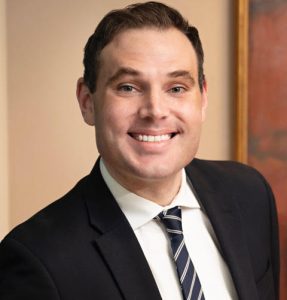
Employer poised to challenge state laws protecting workers who use cannabis off the job
MINNEAPOLIS (October 10, 2025) — Halunen Law, a nationally recognized law firm representing plaintiffs in employee rights cases, has filed suit against a Texas-based home builder on behalf of a Minnesota realtor who was denied a job because of his medical cannabis use during non-work hours.
The realtor, who was enrolled in Minnesota’s medical cannabis registry, applied for a sales position at a new-construction housing development in the Twin Cities. The builder offered him the job after a lengthy application and interview process but rescinded the offer when a pre-employment drug test revealed the presence of THC metabolites.
“Minnesota authorizes the use of cannabis for both medical and recreational purposes,” said Halunen Law attorney Joshua Newville. “State law generally prohibits discrimination against employees for such off-duty usage. Most employers are thus barred from even testing for cannabis.”
Responding to the lawsuit, the builder argues that Minnesota’s laws are preempted by federal law. “It appears this employer is poised to mount a direct challenge both to States’ rights and cannabis-related worker protections,” explained Newville.
This case raises important questions not only for Minnesotans but also for workers nationwide as more states adopt similar protections. Lawmakers, state attorneys general, and civil rights advocates throughout the country may be closely watching as this matter unfolds.
About Halunen Law: With offices in Minneapolis and Chicago, Halunen Law offers experienced legal representation for employees and whistleblowers who courageously challenge illegal actions in their workplace. Founded in 1998, Halunen Law has achieved a reputation as a fearless, tenacious, and successful plaintiffs’ law firm, with a laser focus on achieving justice and meaningful results for its clients. For more information, visit halunenlaw.com.
As a guest on AXIOM’s podcast, “Elevating Experience: Women and Age in the Workplace,” Halunen Law employment attorney, Pamela Johnson, offered valuable insights from her 30-year career as an insurance professional and accomplished litigator. Johnson was joined by Laurie Johnson, a senior-level learning consultant with the Boulder Crest Foundation, and podcast host Scott Rutherford as they discussed the dynamics of gender, age, and experience in the workplace. The episode examines the prevalence of ageism and explores how organizations can and should prioritize the skills and perspectives of older women in the workforce. It includes [pragmatic][useful][realistic] advice for driving cultural change and breaking down workplace barriers, while reminding listeners of opportunities that organizations may miss if they fail to address these issues.
As an of counsel member of Halunen Law’s Employment Litigation Group, Pamela Johnson brings an impressive reputation for advocacy, achievement, and a depth of legal knowledge on behalf of all those she represents. In addition to practicing employment law, Pamela has guided complex cases involving intellectual property, copyrights, patents, trademarks, and insurance, and has protected the privacy rights of high-profile clients, and overseen defamation claims on behalf of corporate conglomerates, celebrities, private individuals, and more.
MSBA’s Commitment to Inclusivity and Equal Justice — A Statement from the MSBA President —
February 12, 2025 — Despite recent national events, the Minnesota State Bar Association remains steadfast in its commitment to an inclusive and welcoming environment for all members of the legal community. We believe that the diversity of our membership strengthens us, and we will continue to welcome and support every member of our community, regardless of gender, race, sex, religion, sexual orientation, gender identity, or immigration status.
All Diversity, Equity, and Inclusion (DEI) programs offered by the MSBA are fully compliant with the law. None of our DEI initiatives have ever involved illegal discrimination. Supporting every member of the legal community is central to our mission.
As the association representing the legal community in Minnesota, we are called to defend equal justice under the law for everyone, including the fundamental freedoms of speech and association. Lawyers are the guardians of the Constitution, and we take that responsibility seriously. We will not stay silent while the rights of individuals or groups are threatened. We will continue to be a voice for inclusivity, equity, and justice in the legal community.
Samuel Edmunds
2024-2025 President
Minnesota State Bar Association
For more than 25 years, Halunen Law has been committed to protecting employee rights. Regardless of social or political headwinds, our dedication to equity and justice has never wavered. Our firm and its attorneys stand in solidarity with the MSBA’s recently affirmed commitment to diversity and inclusivity and the fundamental rights of freedom of speech and association. We commend the MSBA’s ongoing leadership on behalf of Minnesota’s legal community and join them in the continued fight for justice for all people.
Minnesota Star Tribune writer Mike Hughlett reports on a transgender harassment case against Walmart in a recent article: “After state ruling against Walmart, transgender man sues over harassment at West St. Paul Store.” The article provides a detailed account of the case and highlights national studies indicating widespread on-the-job harassment of transgender people. It notes that Minnesota has strong protections for transgender employees as one of 23 states with laws prohibiting transgender discrimination. The United States Supreme Court held in the 2020 Bostock case that Title VII’s antidiscrimination protections include transgender employees, but the use of federal law to protect these employees is under attack. Noting that Bostock is “the law of the land,” Halunen Law employment attorney Josh Newville commented: “..given the Trump administration’s anti-transgender stance, I’m greatly concerned that the EEOC is not going to enforce the law,” adding, “For LGBT persons in states lacking protection against employment discrimination, it’s a scary time.”
If you or someone you know has experienced gender or other forms of workplace discrimination, we encourage you to learn more about employment rights and protections on the Minnesota Department of Human Rights website and the Halunen Law website. If, upon reviewing this information, you believe you may have a case, you can submit a Case Review Form or call us at 612-605-4098 to speak with one of our Intake Specialists.
A tenacious litigator who frequently obtains favorable outcomes for those he represents, Josh Newville leads Halunen Law’s Employment Litigation Group. He is a skilled, thoughtful, and determined professional who brings more than a decade of experience, a deep dedication to civil rights, and a commitment to excellence to his legal practice.
Minnesota Lawyer recently spoke with Halunen Law’’s employment litigation group leader, Josh Newville, along with Matthew Bodie, Robins Kaplan professor at the University of Minnesota Law School, to get their impressions on what may be in store. In “What’s ahead in employment law?” reporter Laura Brown explores the changes Labor and Employment Law may undergo under Trump’s second presidential administration. Bodie and Newville see the potential for even greater changes than the usual back and forth between political parties. In the article, Newville, who has championed LGBTQ rights throughout his career, speculates on the new administration’s impact on anti-discrimination policies, the role of the EEOC, state protections, and more.
“Trump 2.0 might be even more aggressive. At this point, we are going to see an effort to target diversity, equity, and inclusion initiatives at various companies. It is almost that he signaled the EEOC will now, which I think is probable a first in history, be treating DEI initiatives as if they are discriminatory, which, I’m curious to see how that plays out.”
Employment litigation group leader Josh Newvilleis a tenacious litigator who frequently obtains favorable outcomes for those he represents. In more than a decade of practicing law, Josh has handled high-profile cases, secured millions of dollars for his clients, and won victories at the Minnesota Supreme Court and the U.S. Court of Appeals.
HR Daily Advisor, a widely-recognized website offering resources for HR professionals, recently published attorney Pamela Johnson’s article, “Workplace Harassment and Discrimination: What’s the Difference?” The article provides a thorough, thoughtful examination of the complexities of workplace harassment and discrimination, why understanding the difference is important, and steps employees can take to address these illegal actions.
“Unfortunately, regardless of company size or job title, any employee can be subject to both harassment and discrimination. Yet there is a common misunderstanding of what exactly constitutes workplace harassment and discrimination. By having a clear understanding of what they are and how they can be connected, employees will gain a deeper understanding of how to protect themselves. Ultimately, everyone deserves to know their rights and their legal options.”
Committed to clients’ rights, Halunen Law attorney Pamela Johnsonis particularly passionate about representing employees and believes strongly that everyone should be treated fairly, especially in the workplace. She brings the power of persuasion, an impressive reputation for advocacy and achievement, and a depth of legal knowledge to bear for all those she represents.
In “Harassment and discrimination in the workplace: Understanding the difference,” published in BenefitsPro, veteran employment attorney Pamela Johnson offers insights into complex workplace dynamics and how employees can identify and respond to illegal workplace activity.
Johnson shares, “The hard truth is that in workplaces large and small, regardless of position, employees can be the target of harassment, discrimination, or both. Havinga clear understanding of what workplace harassment and discriminationare, and when the two are linked, can go a long way in helping youunderstand your rights, and by extension, what legal options may be available to you.”
As a member of Halunen Law’s Employment Litigation Group, attorney Pamela Johnsonhas an impressive reputation for advocacy and achievement, bringing the power of persuasion and a depth of legal knowledge to bear for all those she represents.
With Lilly Ledbetter’s passing on October 12, 2024 at age 86, our county has lost an unwavering advocate and champion for pay equity.
Nearly a year after retiring from her position at Goodyear Tire & Rubber Co., Ledbetter discovered she had been subjected to gross pay inequity, earning significantly less than her male counterparts. She set out to rectify the matter, and her journey took her to the EEOC, the U.S. Supreme Court, and ultimately to Congress passinglegislation bearing her name. The Lilly Ledbetter Fair Pay Act of 2009 was the first bill President Obama signed after being inaugurated. The bill amended the Civil Rights Act of 1964 and allowed workers to obtain relief, including recovery of up to two years of lost back pay.
Although Ledbetter was never financially compensated for the harm Goodyear caused, her persistence and the eventual legislative outcome have impacted thousands of women nationwide, allowing them to legally challenge unequal pay in their workplaces. In her 70s, Ledbetter continued to devote much energy to the cause—speaking out, writing a book about her experience, and inspiring individuals across the country, often stating that “equal pay for equal work is an American value.” Halunen Law salutes Lilly Ledbetter’s enduring legacy and fearless fight for fair and equal pay for women.
Halunen Law is pleased to announce that attorney Kyle Hahn has joined the firm’s employment law practice group. Kyle brings a collaborative spirit, an acute understanding of the legal process, and a steadfast determination to hold others accountable for their illegal actions. He joins a team of Halunen Law attorneys dedicated to defending the rights of employees and whistleblowers.
With a depth of knowledge and strategic acumen, Kyle has guided clients through complex legal matters to successful outcomes. His practice includes cases of discrimination, retaliation, and the gamut of employment matters, with considerable litigation experience in state and federal courts. Kyle offers clients a personal, professional approach coupled with a dogged determination to get them justice.
After graduating magna cum laud from St. Cloud State University, Kyle pursued and received his law degree from the University of St. Thomas School of Law, where he was deeply engaged in school activities. He has admissions to the Minnesota State Court and U.S. District Court of Minnesota.
About Halunen Law:With offices in Minneapolis and Chicago, Halunen Law offers experienced legal representation for employees, whistleblowers, and those who have experienced illegal actions in their workplace. Halunen Law has achieved a reputation as a fearless, tenacious, and successful plaintiffs’ law firm, focused squarely on achieving justice for its clients and creating workplace and societal change. For more information, visit halunenlaw.com.
When President George H.W. Bush signed the Americans with Disabilities Act (ADA) into law more than a quarter century ago, it represented a sea change for the rights of those who have disabilities and their access to housing, transportation, places of business, and employment opportunities.
Side view of hearing impaired man working on laptop at office
Like other laws that prohibit discrimination in employment against people because of their race, gender, national origin or religion, the ADA and parallel state laws, such as the Minnesota Human Rights Act (“MHRA”), protect disabled people from adverse decisions and actions in hiring and firing and the terms and conditions of employment. Unlike those other laws, however, the ADA and the MHRA also impose affirmative obligations on employers to make “reasonable accommodations” for an employee’s disability – upon the employee’s request – if the worker can otherwise perform the job’s essential functions.
The failure to provide reasonable accommodations, as well as an employer’s failure to engage in a mandated “interactive process” with the employee to determine the feasibility and scope of the accommodation, violate state and federal law. Accordingly, an employee with a disability who asks for a reasonable work environment, schedule, or other employment changes, must understand their rights and available remedies if the employer engages in reasonable accommodation discrimination.
What Is Reasonable Accommodation In the Workplace?
Under the ADA and the MHRA, the obligation to provide reasonable accommodations to disabled employees applies to employers that have 15 or more employees. Generally, a reasonable accommodation is any change in the work environment or in how a job is customarily performed that enables a disabled individual to apply for a position, do the job, or gain equal access to the benefits and privileges of that job.
What Does “Reasonable” Mean?
The “reasonable” part of the accommodation means the requested or proposed modification is one that doesn’t cause the employer “undue hardship.” Undue hardship means the accommodation would involve significant difficulty or expense when considering the resources and circumstances of the particular employer relative to the cost or difficulty of providing a specific modification.
What Are Examples of a Reasonable Accommodation?
Common examples of reasonable accommodation in the workplace include providing:
Modified workspaces to allow for physical accessibility
Modified or flexible work schedules, including allowing remote work
Devices, equipment or assistive technology
Qualified readers and interpreters
Generally, the following modifications wouldn’t be considered reasonable accommodations:
Removing an essential function or hiring someone else to perform the function
Reducing production or performance standards
Reassigning the employee to a different supervisor
Promoting the employee to a higher position
Provisioning “light-duty” items
Excusing misconduct
Providing “personal-use items,” such as eyeglasses, wheelchairs or prosthetic limbs
While an employer doesn’t need to provide a requested or proposed accommodation if it would cause significant difficulty or expense, it’s obligated under the MHRA (but not the ADA) to make “documented good faith efforts to explore less restrictive or less expensive alternatives, including consultation with the disabled person or with knowledgeable disabled persons or organizations.” This consultation requirement is part of the “interactive process” between the employer and employee regarding accommodation mandated by federal and state law.
How and When Should I Request a Reasonable Accommodation?
The process of exploring a reasonable accommodation begins when an employee requests modifications to their job or work environment. Written requests aren’t required. The employee can make a request in face-to-face conversation, email or any other communication method. The request can be made in “plain English” and need not mention the ADA or state disability law or use the phrase “reasonable accommodation.”
An individual with a disability may request a reasonable accommodation at any time during the application process or during the period of employment. Neither the ADA or the MHRA precludes an employee with a disability from requesting a reasonable accommodation because they did not ask for one when applying for a job or after receiving a job offer. Rather, an individual with a disability should request a reasonable accommodation when they know that there is a workplace barrier that is preventing them, due to a disability, from effectively competing for a position, performing a job, or gaining equal access to a benefit of employment. As a practical matter, it may be in an employee’s interest to request a reasonable accommodation before performance suffers or conduct problems occur.
What’s the Interactive Process for a Requested or Proposed Accommodation?
An employee’s request is the first step in the “informal, interactive process” between the employer and the employee as to providing a reasonable accommodation.
As set forth in the MHRA, “this process should identify the limitations resulting from the disability and any potential reasonable accommodations that could overcome those limitations.” The employer can ask the employee relevant questions to make an informed decision about the request, including asking about the employee’s disability and functional limitations and what type of reasonable accommodations are needed.
An employer isn’t required to provide a specific requested accommodation but may offer alternative suggestions and discuss their effectiveness and feasibility with the employee.
How Long Does an Employer Have to Accommodate a Disability?
While neither the ADA nor the MHRA sets a specific time frame for engaging in the interactive process and implementing a reasonable accommodation, an employer can’t unreasonably drag its heels. As the Equal Opportunity Employment Commission (EEOC) stated in guidance on this point:
An employer should respond expeditiously to a request for reasonable accommodation. If the employer and the individual with a disability need to engage in an interactive process, this too should proceed as quickly as possible. Similarly, the employer should act promptly to provide the reasonable accommodation. Unnecessary delays can result in a violation of the ADA.
Is Your Minnesota Employer Engaging in Reasonable Accommodation Discrimination?
Given the nuances and fact-specific analysis involved in determining whether an accommodation is “reasonable” and whether an employer has met its obligations under Minnesota and federal law to engage in a good faith interactive process, it can be difficult for an employee to know if the employer has engaged in prohibited reasonable accommodation discrimination.
As discussed, not every denial of a requested modification violates the law. But when an employer’s response doesn’t meet the requirements of Minnesota or federal law, the lack of accommodation for an employee with a disability can mean the loss of a job opportunity or a paycheck, be a major career setback, and cause psychological stress. For all these reasons, state and federal laws provide such employees with remedies if they experience reasonable accommodation discrimination. These not only include requiring employers to make reasonable accommodations, but also can involvehiring, promotion, reinstatement, back pay and attorneys’ fees.
The Role of An Attorney In Workplace Discrimination Cases
If you’ve requested a reasonable accommodation to address your disability or limitations and your employer denied your request or didn’t respond to it, speaking with an experienced disability discrimination attorney is the best way to understand your rights, determine whether your employer violated the law, and pursue any available remedies, including compensation.
Contact Halunen Law Today To Discuss Your Workplace Discrimination Questions and Concerns
Workplace discrimination, including reasonable accommodation discrimination, is illegal. If you feel you’ve experienced illegal action in your workplace, we encourage you to submit a Case Review Form to our firm. One of our attorneys will review your information, and you’ll receive a response from our firm in a timely manner. There is no charge for this confidential process. And, if we take your case, as a contingency-based law firm, there is no cost unless we win. We’re here to help you navigate your lawful rights and ensure you get the treatment you deserve. Together, we can hold employers accountable and create a fairer workplace for everyone.

 As an of counsel member of Halunen Law’s Employment Litigation Group,
 A tenacious litigator who frequently obtains favorable outcomes for those he represents,