Picture1

MSBA’s Commitment to Inclusivity and Equal Justice
— A Statement from the MSBA President —

February 12, 2025 — Despite recent national events, the Minnesota State Bar Association remains steadfast in its commitment to an inclusive and welcoming environment for all members of the legal community. We believe that the diversity of our membership strengthens us, and we will continue to welcome and support every member of our community, regardless of gender, race, sex, religion, sexual orientation, gender identity, or immigration status.

All Diversity, Equity, and Inclusion (DEI) programs offered by the MSBA are fully compliant with the law. None of our DEI initiatives have ever involved illegal discrimination. Supporting every member of the legal community is central to our mission.

As the association representing the legal community in Minnesota, we are called to defend equal justice under the law for everyone, including the fundamental freedoms of speech and association. Lawyers are the guardians of the Constitution, and we take that responsibility seriously. We will not stay silent while the rights of individuals or groups are threatened. We will continue to be a voice for inclusivity, equity, and justice in the legal community.

Samuel Edmunds
2024-2025 President
Minnesota State Bar Association

For more than 25 years, Halunen Law has been committed to protecting employee rights. Regardless of social or political headwinds, our dedication to equity and justice has never wavered. Our firm and its attorneys stand in solidarity with the MSBA’s recently affirmed commitment to diversity and inclusivity and the fundamental rights of freedom of speech and association. We commend the MSBA’s ongoing leadership on behalf of Minnesota’s legal community and join them in the continued fight for justice for all people.

Minnesota Lawyer recently spoke with Halunen Law’’s employment litigation group leader, Josh Newville, along with Matthew Bodie, Robins Kaplan professor at the University of Minnesota Law School, to get their impressions on what may be in store. In “What’s ahead in employment law?” reporter Laura Brown explores the changes Labor and Employment Law may undergo under Trump’s second presidential administration. Bodie and Newville see the potential for even greater changes than the usual back and forth between political parties. In the article, Newville, who has championed LGBTQ rights throughout his career, speculates on the new administration’s impact on anti-discrimination policies, the role of the EEOC, state protections, and more. 


“Trump 2.0 might be even more aggressive. At this point, we are going to see an effort to target diversity, equity, and inclusion initiatives at various companies. It is almost that he signaled the EEOC will now, which I think is probable a first in history, be treating DEI initiatives as if they are discriminatory, which, I’m curious to see how that plays out.”

Read the full article (PDF) 

Clay Halunen

The founder of Halunen Law, Clayton Halunen spent more than 25 years as a trial lawyer seeking justice for employees, from delivery drivers to CEOs, in individual, class action, and whistleblower cases. Raised in northern Minnesota by parents who both experienced workplace discrimination, he built his career holding powerful companies accountable for illegal conduct, including some of the largest corporations in the country. His work includes a $1.5 billion settlement in a pharmaceutical fraud False Claims Act whistleblower lawsuit. Learn more about Clayton Halunen.

HR Daily Advisor, a widely-recognized website offering resources for HR professionals, recently published attorney Pamela Johnson’s article, “Workplace Harassment and Discrimination: What’s the Difference?” The article provides a thorough, thoughtful examination of the complexities of workplace harassment and discrimination, why understanding the difference is important, and steps employees can take to address these illegal actions.

“Unfortunately, regardless of company size or job title, any employee can be subject to both harassment and discrimination. Yet there is a common misunderstanding of what exactly constitutes workplace harassment and discrimination. By having a clear understanding of what they are and how they can be connected, employees will gain a deeper understanding of how to protect themselves. Ultimately, everyone deserves to know their rights and their legal options.”

Read the full article (PDF) 
Clay Halunen

The founder of Halunen Law, Clayton Halunen spent more than 25 years as a trial lawyer seeking justice for employees, from delivery drivers to CEOs, in individual, class action, and whistleblower cases. Raised in northern Minnesota by parents who both experienced workplace discrimination, he built his career holding powerful companies accountable for illegal conduct, including some of the largest corporations in the country. His work includes a $1.5 billion settlement in a pharmaceutical fraud False Claims Act whistleblower lawsuit. Learn more about Clayton Halunen.

In the October 4, 2024 article. “EEOC Suits Warn Employers To Take Harassment Seriously,” Law360 reporter Vin Gurrieri examines the U.S. Equal Employment Opportunity Commission’s (EEOC) filing of approximately 110 merit lawsuits in fiscal year 2024, ending September 30.  Many of the cases accused employers of fostering environments in which workers were consistently harassed based on sex or race.

Halunen Law’s Employment Litigation Group Leader, Josh Newville, weighs in on the EEOC’s filings, sharing that the commission is “sending a very clear and very strong message” with its enforcement approach, a message that is difficult for individual employees to send on their own.

Read the full article, which includes additional commentary by Newville and further discussion of the EEOC’s latest anti-harassment enforcement push.

Clay Halunen

The founder of Halunen Law, Clayton Halunen spent more than 25 years as a trial lawyer seeking justice for employees, from delivery drivers to CEOs, in individual, class action, and whistleblower cases. Raised in northern Minnesota by parents who both experienced workplace discrimination, he built his career holding powerful companies accountable for illegal conduct, including some of the largest corporations in the country. His work includes a $1.5 billion settlement in a pharmaceutical fraud False Claims Act whistleblower lawsuit. Learn more about Clayton Halunen.


MINNEAPOLIS, MN: Halunen Law is pleased to announce that attorney JoshuaNewville (Josh) Newville has joined the Firm to Lead its Employment Litigation Group. A tenacious litigator with more than a decade of experience, he frequently obtains favorable outcomes for those he represents. He is a skilled, thoughtful, and determined professional whose legal acumen and deep dedication to civil rights are a formidable force and an ideal fit to guide Halunen’s team of talented employment law attorneys.

Josh has handled high-profile cases, secured millions of dollars for his clients, and won victories at the Minnesota Supreme Court and the U.S. Court of Appeals. Early in his career, Josh led the successful fight for marriage equality in two U.S. States and won precedent-setting legal protections for vulnerable Minnesotans.

Active in the community, Josh is an adjunct law professor at the University of Minnesota, an ethics investigator, and a mediator for employment disputes. He received the Equality & Justice Award from the Minnesota Lavender Bar Association and has been recognized by Super Lawyers and the National Trial Lawyers Top 40 Under 40. In addition to his legal work, Josh is also known for producing a top-rated investigative podcast about missing persons.

Born and raised in rural Wisconsin, Josh earned his undergraduate and law degrees at the University of Minnesota. He is licensed in Minnesota and Wisconsin (state and federal courts), Colorado and North Dakota (federal courts), and the U.S. Court of Appeals – 8th and 9th Circuits.

About Halunen Law: With offices in Minneapolis and Chicago, Halunen Law offers experienced legal representation for employees, whistleblowers, and those who have experienced illegal actions in their workplace. Halunen Law has achieved a reputation as a fearless, tenacious, and successful plaintiffs’ law firm, focused squarely on achieving justice for its clients and creating workplace and societal change. For more information, visit halunenlaw.com.

Although there is increased awareness and effort by many employers to improve inclusivity in the workplace, it remains the case that many individuals with disabilities are forced to leave their jobs or are terminated because their employers are unwilling to address reasonable accommodation requests.

Visually impaired businesswoman doing a presentation in a business meeting with guide dog

The article “7 Key Accommodations Disabled Workers are Due,” offers important insight into steps employees and employers must take to ensure workplace equity and compliance. 

Read the full article.

Each of us is more than the sum of our parts. No single characteristic defines us; rather, we are an amalgamation of different traits, inclinations, experiences and perspectives.

Female doctor looks over medical record for upcoming appointment

For some people, their unique combination of biology and background means they’re members of more than one class that the law protects from workplace discrimination and harassment. A Black woman can experience prohibited discrimination premised on her race and her gender. A gay Jewish man may be the victim of harassment and abuse because of his religion and sexual orientation. 

Known as “intersectional discrimination,” this type of workplace conduct is widespread and increasingly recognized by courts as the basis for claims under Title VII of the Civil Rights Act of 1964 and other federal and state anti-discrimination laws. When the claim involves discrimination against a woman because of her gender and membership in another protected class, it’s sometimes called a “sex-plus” claim. And when age is the other asserted basis for an employer’s discriminatory actions (e.g., a woman in her 50s who’s terminated because of her sex plus her age), that’s ”gendered ageism.” It’s illegal, and can be the basis of a claim for compensation and other relief.

Intersectional Discrimination Defined and Recognized

The analytical framework for intersectional discrimination was popularized by Black legal scholar Kimberlé Crenshaw, who argued that “different forms of inequality […] operate together and exacerbate each other.” The Center for Intersectional Justice describes intersectionality as:

“The ways in which systems of inequality based on gender, race, ethnicity, sexual orientation, gender identity, disability, class and other forms of discrimination “intersect” to create unique dynamics and effects. For example, when a Muslim woman wearing the Hijab is being discriminated, it would be impossible to dissociate her female from her Muslim identity and to isolate the dimension(s) causing her discrimination.”

Over the past two decades, many federal and state courts have repeatedly recognized and allowed intersectional discrimination and harassment claims to proceed as employment claims when employees experienced disparate treatment because of their membership in more than one protected class. As one federal court noted, “Some characteristics, such as race, color, and national origin, often fuse inextricably. Made flesh in a person, they indivisibly intermingle. Title VII prohibits employment discrimination based on any of the named characteristics, whether individually or in combination.”

Sex-Plus-Age Discrimination Claims

Many cases that recognize intersectional discrimination involve older female workers who claim they suffered adverse employment actions based on their gender and ages. Many state laws, including the Minnesota Human Rights Act, prohibit both age and gender discrimination. While “age” isn’t a protected class under Title VII, the federal Age Discrimination in Employment Act of 1967 (ADEA) prohibits age-based discrimination in the workplace, making a gendered ageism case viable under federal law as well. 

Despite its illegality, workplace age discrimination is rampant in a business, societal, and technological culture that often venerates youth over experience. Approximately 453,000 American workers filed age discrimination claims with the Equal Employment Opportunity Commission between 1997 and 2020, while about one in five workers over age 40 and one in four workers over age 60 believe they have experienced age discrimination in the workplace, according to a Senior Living survey. 

While men and women can experience age-based discrimination, studies have shown that it disproportionally affects female workers, especially women of color. A 2023 analysis of gendered ageism in the workplace noted that: 

“Age discrimination is not equal; ageism tends to be gendered. … Studies exploring the well-being of working women have indicated that women are more likely to be victimized by all forms of discrimination, including ageism. In one study of 6,642 women over 18, 63% of those over 50 stated that they were discriminated against. Women, particularly women of color, are further subjected to the intersecting prejudices of age, ethnicity, and gender bias.” (citations omitted)

A 2020 federal appellate decision illustrates how courts recognize and treat sex-plus-age discrimination claims. In Frappied v. Affinity Gaming Black Hawk, LLC, the plaintiffs brought claims under Title VII and the ADEA, alleging their employer terminated them based on their ages and gender. Reversing the trial court’s dismissal of their claims, the appellate court held that “sex-plus-age claims are cognizable under Title VII,” noting that “Ample precedent holds that Title VII forbids ‘sex-plus’ discrimination in cases in which the ‘plus-’  characteristic is not itself protected under the statute.” 

The court thus concluded that: 

“Intersectional discrimination against older women is a form of discrimination based on sex stereotypes that Title VII was intended to prohibit. And discrimination against older women that does not target older men is a form of sex discrimination.”

Whether based on one protected trait or a combination of characteristics, workplace discrimination is illegal. It unfairly deprives qualified individuals of opportunities or subjects them to hurtful and demeaning behavior or comments. No one should have to abide by or endure such treatment.

If you feel you’ve experienced illegal action in your workplace, we encourage you to submit a Case Review Form to our firm. One of our attorneys will review your information, and you’ll receive a response from our firm in a timely manner. There is no charge for this confidential process. And, if we take your case, as a contingency-based law firm, there is no cost unless we win.

We’re here to help you navigate your lawful rights and ensure you get the treatment you deserve. Together, we can hold employers accountable and create a fairer workplace for everyone.
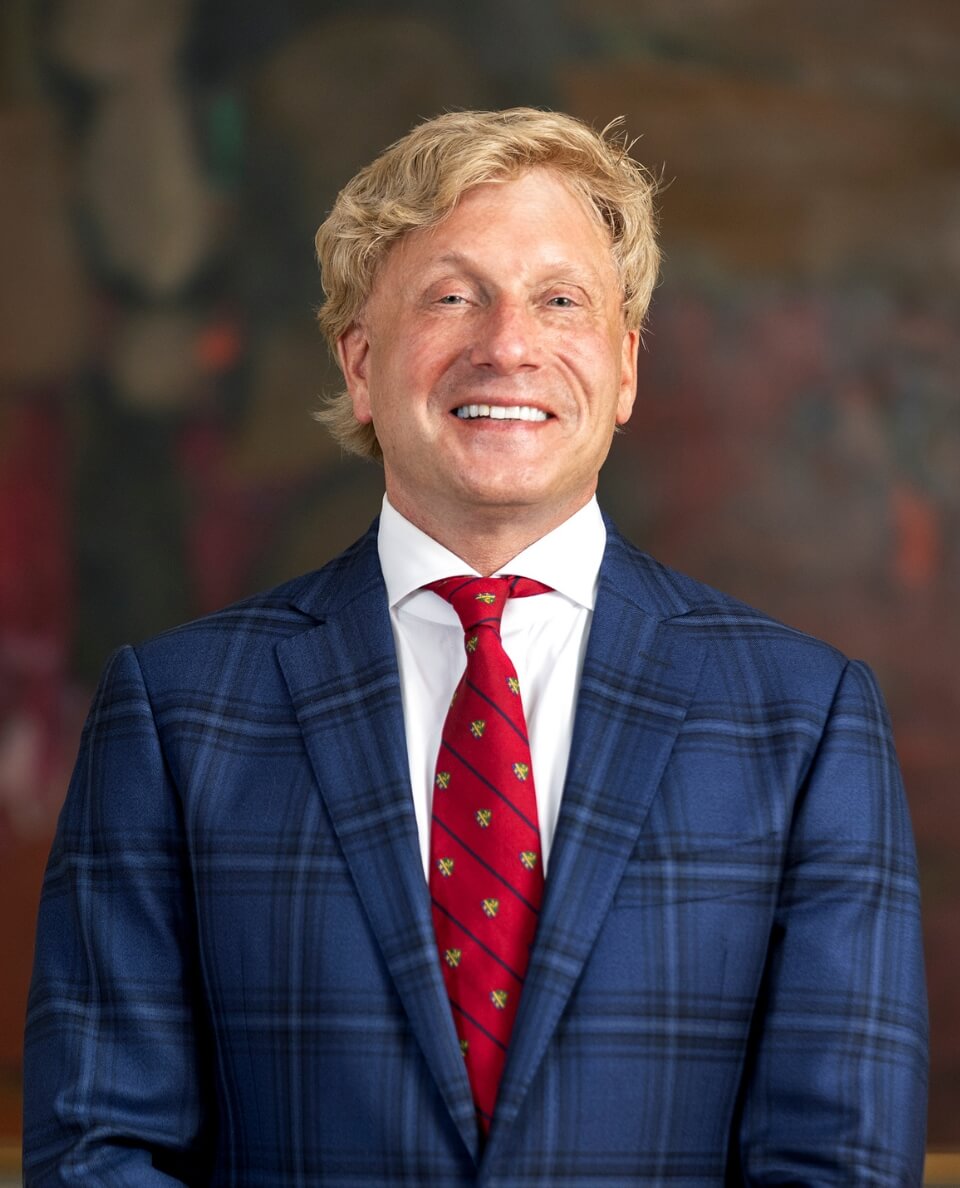
Clay Halunen

The founder of Halunen Law, Clayton Halunen spent more than 25 years as a trial lawyer seeking justice for employees, from delivery drivers to CEOs, in individual, class action, and whistleblower cases. Raised in northern Minnesota by parents who both experienced workplace discrimination, he built his career holding powerful companies accountable for illegal conduct, including some of the largest corporations in the country. His work includes a $1.5 billion settlement in a pharmaceutical fraud False Claims Act whistleblower lawsuit. Learn more about Clayton Halunen.

Firm wins Gold Award honors in Star Tribune statewide “Minnesota’s Best” Campaign 

MINNEAPOLIS, MN (September 25, 2022): Minneapolis-based Halunen Law received the distinct honor of being selected for the second consecutive year as a Gold Award Winner for its outstanding work in the legal field. In the 2022 Star Tribune “Minnesota’s Best” campaign, voters from across the state made their preferences known, and once again Halunen Law received the top-ranked status in the Employment Lawyer and Law Firm categories. 

“We’re grateful to all who took the time to vote for Halunen Law in the Star Tribune 2022 Minnesota’s Best campaign. Halunen’s team of talented attorneys and staff is fiercely dedicated to defending employees and courageous whistleblowers who come to us at some of the most challenging times in their lives. Our successful record demonstrates the deep expertise and commitment we bring to each case. We’re humbled by the trust our clients have put in us these past 24 years, and to receive the Minnesota’s Best Award for the second year in a row is very gratifying. We promise to continue to fight for what’s right and create consequential change in the process.”

About the “Minnesota’s Best” Campaign: With one of the highest daily readership numbers per capita of any media publication in the country, the Star Tribune put their considerable reach across the state to launch their inaugural “Best of Minnesota” campaign. The campaign asked residents to give their opinions on multiple categories, including Food and Drink, Legal, Entertainment, Health Care, Education, and much more. More than 750,000 total votes were tabulated in 2022, resulting in reflection and celebration of “Minnesota’s Best” businesses and services across the state.   

About Halunen Law: Founded in 1998 and with offices in Minneapolis, Chicago, and Phoenix, Halunen Law offers experienced legal representation to employees, whistleblowers, and consumers. Halunen Law has achieved a reputation as a fearless, tenacious, and successful plaintiffs’ law firm, with a laser focus on achieving justice for its clients. For more information, visit halunenlaw.com.

If you feel you’ve experienced illegal action in your workplace, we encourage you to submit a Case Review Form to our firm. One of our attorneys will review your information, and you’ll receive a response from our firm in a timely manner. There is no charge for this confidential process. And, if we take your case, as a contingency-based law firm, there is no cost unless we win.

We’re here to help you navigate your lawful rights and ensure you get the treatment you deserve. Together, we can hold employers accountable and create a fairer workplace for everyone.

Woman Telecommuting - Working From Home Taking Care of Baby

The landscape for workplaces is changing. As technology evolves, so too does the way we do our jobs.

Many people can (and do) work just as effectively at home as they do at work. And a recent court case said just that. It held that a telecommuting arrangement could be a reasonable accommodation for a person suffering from a disability. Click to read the case: E.E.O.C. v. Ford Motor Co., 12-2484, 2014 WL 1584674 (6th Cir. Apr. 22, 2014).

If you have a disability, you have a right to reasonable accommodation from your employer. In the case above, the plaintiff had a very bad case of Irritable Bowel Syndrome (IBS), and asked to work from home.

She argued that this would alleviate her IBS symptoms and that most of her work could be done via computer or telephone. Ford denied the request, stating that presence in the office was essential to her job. Ford instead offered other accommodations, such as putting her office closer to the bathroom, because it argued that she needed to interact with other team members and could only access information during “core” business hours.

Read More…

A close cropped photo of the word "Justice" etched into the marble facade of a building.

 Carlson v. BNSF Railway Company

Halunen Law increased its winning appellate record for 2019 to 3-0, with the recent Carlson v. BNSF Railway Company decision. Partner Christopher Moreland was specially retained to litigate the appeal in this case and the win is particularly notable—the Court of Appeals reinstated a $207,333 jury award that a District Court had taken away.

On November 11, 2015, Jason Carlson was working as a conductor for the BNSF railroad when his employer assigned him to take a train from Minneapolis to Dilworth. What BNSF knew, but Carlson did not, is that the locomotive on his train was unsafe. Indeed, before assigning Carlson and his engineer to use that particular locomotive, the BNSF received reports from the previous operating crew that the toilet in its cab was leaking chemicals and human waste, thus dispersing noxious fumes throughout cab. When he boarded the locomotive and smelled the stench, Carslon again reported the engine as defective, but his bosses ignored him and sent the train on its way.

Throughout the trip, Carlson inhaled the dangerous fumes and, not surprisingly, became sick. Unfortunately, his illness proved to be long-lasting, and his doctors ultimately diagnosed him with irritant induced asthma and vocal cord dysfunction as a result of his exposure. Although Carlson was able to return to his conductor’s duties following the incident, his respiratory system had been permanently compromised, and he was forced to work a less demanding schedule, which, in turn, caused him to earn less money.

Carlson sued the BNSF in Hennepin County (Minnesota) District Court, and on October 9, 2017, the jury returned a verdict in his favor, concluding that BNSF was at fault for assigning Carlson to work on an unsafe locomotive and awarding Carlson damages, including $207,333.00 to compensate him for his loss of earning capacity (i.e., his reduced ability to earn due to his injuries). Once the trial was over, however, the BNSF filed a motion arguing that the evidence Carlson had presented at trial was not sufficient to support the jury’s verdict. The trial judge granted the BNSF’s motion and took away the $207,333 award for his loss of earning capacity.

Halunen Law to Challenge

After receiving the judge’s order, Carlson’s trial counsel hired Halunen Law to challenge it in the Minnesota Court of Appeals. On February 26, 2019, Halunen Law attorney Chris Moreland appeared before the court, arguing that the trial judge had invaded the province of the jury and wrongly took away its verdict.[1] On May 20, 2019, the Minnesota Court of Appeals issued its opinion reversing the trial judge’s order and reinstated the jury’s award in favor of Carlson.[2]

Said Moreland, “the right to a jury trial is guaranteed by the Constitution, and it is the bedrock upon which our justice system is founded. In this case, the jury spoke. My client suffered serious injuries, and the jury awarded him damages. I’m happy I could help make sure Mr. Carlson will now receive the compensation the jury determined he deserves.”
[1] A recording of the oral argument 

© 2026 Halunen Law | Minneapolis Employment Attorneys