
Shot of a young businessman suffering from a headache in a modern office at work

The first thing to do is to remain calm. While on leave, you should continue to receive pay and benefits. Take the time to understand your rights and obligations while on leave.

What is Administrative Leave?

Employers sometimes place an employee on administrative leave if there is a pending investigation into their conduct or into a complaint they submitted. The leave is usually initiated by Human Resources. There may or may not be a time frame on how long your leave may last. You may ask clarifying questions to get a better understand the length and reasons for placing you on administrative leave. You can also inquire as to your employment status while on leave.

What is your employer investigating?

Being the subject of an investigation or submitting a complaint that initiates an internal investigation can be stressful and scary. Most employers conduct investigations under an umbrella of confidentiality. This is normal investigative process, and you may not get much information about the investigation or its status. Employers investigate allegations of misconduct or other legal violations all the time. They are obligated to conduct investigations fairly and may seek counsel to ensure they are doing it appropriately. In this process, the employer will determine who they interview and when. Don’t be surprised if your employer doesn’t give you information and may not acknowledge if or whether it will contact any people you may have suggested they contact.

What if I see the leave as retaliatory?

Retaliation is prohibited in the workplace, but sadly it happens all the time. If you believe being placed on leave is in retaliation for engaging in a protected activity, such as reporting illegal harassment, safety violations or fraudulent conduct, it would be wise to consult with an attorney experienced in retaliation and whistleblower law.

What should I do on leave?

Be an excellent employee and conduct yourself in compliance with the policies of the company. You should respond promptly to employer requests and cooperate with the investigation. It may be prudent for you to request a copy of your personnel file and review company policies to ensure continued compliance with them.

Here are some ways to keep in contact with your employer without escalating anything:

  • Keep your contacts with your employer in writing and neutral. Sarcasm may be tempting, but hardly ever helps the situation.
  • Focus on understanding the process, not inflicting blame.
  • Set boundaries without emotion. “I’m happy to discuss this in a meeting. Please include HR,” or “I’d like to respond after I’ve reviewed this in writing.”
  • If you’re emotional, draft → wait → edit. It may feel good to get your frustrations out on paper, but always step back and rewrite your communication at a time when you are more calm. If you do seek legal representation in the future, the tone of your communications will come into scrutiny, so always write thoughtfully, instead of emotionally.

What should I not do?

Being put on administrative leave can cause anger and outrage, especially if you perceive the leave as being unjust or retaliatory. It is not helpful to confront your employer, do anything that could create more animosity, or post your frustrations on social media. It is also a good idea to avoid talking to other employees. If there is an urge to try to access files and folders that you SHOULD NOT have access to, suppress it. You still must comply with all company policies, even if you believe you are treated unfairly.

What are my rights on leave?

You should still receive pay and benefits, but you should look at your employee handbook for the specifics on how your organization handles administrative leave. You should also be treated fairly as compared to other employees. We’re here to help you navigate your rights under Minnesota law and ensure you get the treatment you deserve. Together, we can hold employers accountable and create a fairer workplace for everyone.
Jackie Olsen


Attorney Jacqueline Olson brings a valuable perspective, expert insight, and deep understanding of corporate culture in her fight for employee rights. Through her previous work in private practice and as an Assistant Commissioner with the Minnesota Department of Commerce, she gained expertise in consumer and employee rights, state and federal regulations, licensing, and more. She is eager to use this experience to benefit employees—work she is passionate about.

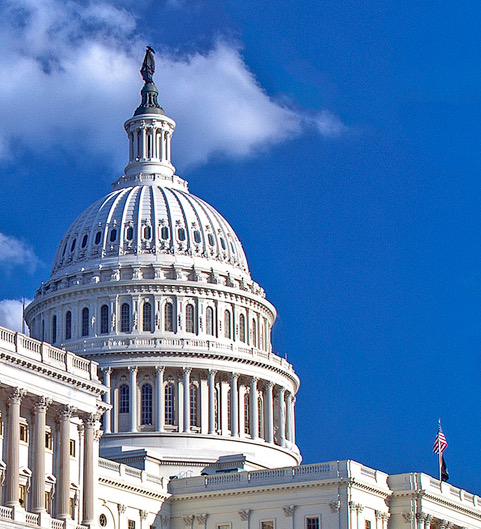
US-Senate-BuildingForced arbitration is a powerful tool used by employers to limit employees from suing them in court. Under the Federal Arbitration Act (“FAA”), employers have wide latitude to force employees into mandatory arbitration. Arbitration is a binding process that is conducted by a private judge (arbitrator),  instead of a public trial. Arbitration can have many disadvantages to employees as compared to court, including:

  • Shortened hearings with no formal rules of evidence
  • Very limited ability to obtain documents and information from the employer before the hearing
  • Not public
  • Extremely limited appeal rights

Because employers often condition employment offers on signing an arbitration agreement, employees often do not truly have a choice whether to sign away their right to go to court should they decide sue their employer. The FAA has been broadly interpreted and reinforced by the United States Supreme Court in the past few decades, effectively denying employees their constitutional right to have their case heard in court.[1]

To combat forced arbitration the U.S. House of Representatives passed the Fair Arbitration Injustice Repeal (“FAIR” Act) in 2019. The FAIR Act would repeal the FAA, finally allowing employees to have their day in court. But the FAIR Act was never brought to the floor in the Republican-controlled Senate, and therefore didn’t become law.

On February 11, 2021, the FAIR Act was re-introduced to the House of Representatives (H.R. 963) by Representative Hank Johnson (D-GA). The FAIR Act is expected to pass the House again this year. Since Democrats now (narrowly) control the Senate, the FAIR Act is likely to make it out of committee in the Senate, and go to a full floor vote.

However, it is unclear whether the FAIR Act will garner enough Republican support in the Senate to overcome the filibuster, which remains in place, though the prohibition of forced arbitration in employment matters has received bipartisan support in the past.[2]

If you support ending forced arbitration, please contact your elected representative and encourage them to vote yes on the FAIR Act (H.R. 963): https://www.usa.gov/elected-officials.

Halunen Law supports the rights of employees to have full and free access to the court system. If you are subject to a forced arbitration agreement and feel you are being treated illegally in the workplace, the experienced employment law attorneys at Halunen Law are here to help. Contact us today for a free consultation.

[1] https://www.law.cornell.edu/constitution/seventh_amendment

[2] https://endforcedarbitration.medium.com/the-bipartisan-case-for-ending-forced-arbitration-485f73eeb635

PART ONE 


Ten Things Minnesota Job Applicants Need To Know About Drug & Alcohol Testing Laws

You received a telephone call from a prospective employer, and they want to hire you! You are ecstatic – this is the dream job you’ve always wanted! The employer goes on to tell you that that the “offer of employment is contingent upon you passing a drug and alcohol test.”
You stop dead in your tracks…

…Am I required to submit to the test?
…What if my current medications impact my test results?
…What happens if I do not pass?
…What should I do?

Read More…

A mother checks her daughter's temperature as they sit in a clean, well-lit kitchen.With the 2020 elections fast-approaching, focus has again shifted to issues surrounding the availability of health care and medical leave. Unfortunately, but perhaps not surprisingly given the current political climate, we’re hearing a lot of talk, but not seeing a lot of action, which is particularly tragic given the fact that less than 15% of workers nationwide currently have access to paid family or medical leave.

The lack of paid leave can have devastating consequences on employees who are forced to miss work in order to take care of their sick children, elderly parents, etc. Indeed, such employees often find their paychecks being docked for missed time, or, in the case of long-term illness or family care obligations, may even be terminated. While there are some laws that require certain employers to provide periods of unpaid leave (for example, the federal Family Medical Leave Act (FMLA)), those laws do not provide any relief from the economic hardships that almost invariably accompany an unexpected medical leave.

The Minnesota Legislature is currently considering a bill (HF 5-Halverson) that would alleviate some of those financial hardships. Specifically, the MN House DFL has proposed legislation known as the Paid Family Medical Leave Act (PFMLA), which would provide Minnesota workers with up to 12 weeks of paid leave to care for a family member with a serious health condition, or to bond with a newborn child.

Generally speaking, workers would be eligible for partial wage replacement ranging from 55-90% of their regular wages, with benefits capped at $1,000 per week. Costs for the program would be split between employers and their employees, with each paying approximately $100 per year for each worker. Importantly, employers who already provided paid family leave would be able to opt out of the program and would not be required to pay such program costs.

This is not the first time the Minnesota legislature has considered the PFMLA. In 2019, Minnesota House Democrats included the substance of the Act in their initial jobs bill, but the Republican-controlled Senate opposed it, forcing it to be dropped from final negotiations.

We at Halunen Law support this legislation and the critical benefits and protections it would provide to Minnesota workers. We hope you feel the same, and if you do, we would urge you to contact your state representatives and let them know.

HELPFUL LINKS

For a summary of the PFMLA, click here:

https://www.house.leg.state.mn.us/dflpdf/e80dacba-5b81-4b8e-8861-828d90b2e6ad.pdf

For the text of HF 5 and more detailed information, click here:

https://www.house.leg.state.mn.us/bills/Info/HF5/91/2019/0

To find your congressional district, click here:

https://www.gis.leg.mn/pdf/leg2012/2012combo.pdf

To find out who represents your district in the Minnesota House of Representatives, click here: https://www.gis.leg.mn/php/house.php

To find out who represents your district in the Minnesota Senate, click here: https://www.gis.leg.mn/php/senate.php

is it legal to record a conversation with employer halunenlaw.com

As an employment law attorney, I am often asked, “Can I record a conversation with my employer without saying that I am recording it?” The answer depends on whether the state you are recording in requires a one-party or two-party consent and whether your employer has a company policy that prohibits employees from recording conversations.

Read More…

PART ONE 


Ten Things Minnesota Job Applicants Need To Know About Drug & Alcohol Testing Laws

You received a telephone call from a prospective employer, and they want to hire you! You are ecstatic – this is the dream job you’ve always wanted! The employer goes on to tell you that that the “offer of employment is contingent upon you passing a drug and alcohol test.”
You stop dead in your tracks…

…Am I required to submit to the test?
…What if my current medications impact my test results?
…What happens if I do not pass?
…What should I do?

Read More…

A Target employee traveled across the country earlier this month to deliver a petition to the company’s headquarters in Minneapolis. The petition requested that the store change its hours for Black Friday shopping, which have been creeping earlier and earlier each year, and the store now opens at 9 pm on Thanksgiving.

The woman wrote on her petition that among her three jobs, she wishes that she could have Thanksgiving off from all of them to enjoy the day with her family. She says that the company doesn’t allow vacation requests for several days each year, including Thanksgiving night and Black Friday.

Read More…

A recent University of Minnesota study found that flexible workplaces are not only conducive to employee health, but also to measurable productivity. The study was conducted at Best Buy headquarters in Richfield where a test initiative directed workers to focus on results and allowed them to change when and where they performed work based on their own needs.

The change of pace – which proved beneficial for both employer and employee – is not expected to be written into law in the form of new employee rights anytime soon. However, it is interesting to see how employees and companies can thrive when an added level of mutual respect is promoted in the workplace.

Read More…

© 2026 Halunen Law | Minneapolis Employment Attorneys